
Last fall, I got a chance to land a game-changing contract—$20,000 worth of 10-meter steel pipes for a new client. The catch? My warehouse was already stuffed, with no room for the extra stock. I had to pass, watching the deal slip away while my stomach churned. If you’ve ever searched “warehouse capacity expansion” because you’re turning down orders for lack of space, I know that frustration. I was choking my own growth—until I found a way to fit more stock without begging for a bigger building.
The Squeeze That Stalled My Growth
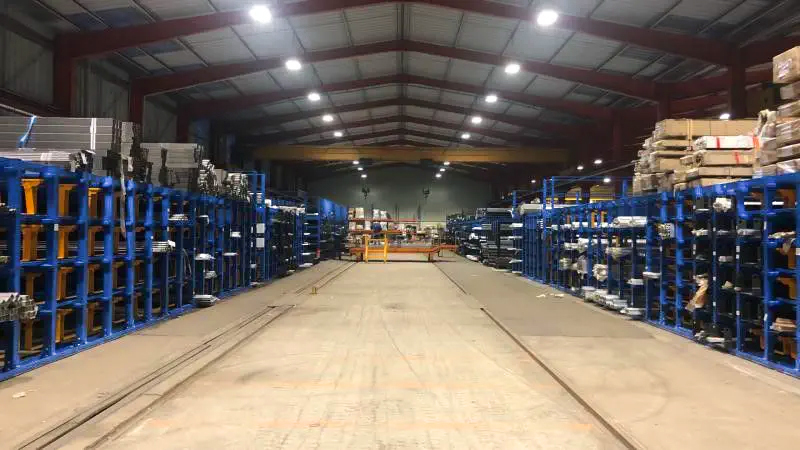
My warehouse is a solid 5,000 square feet, handling long materials like 6-meter pipes, 12-meter rods, and heavy flats. Business was steady, but I was hitting a wall. My cantilever racks could hold 60 pipes, max, and every new delivery meant playing Tetris—shuffling stock, stacking higher, or worse, saying no to orders. Last September, that $20,000 contract wasn’t the first I’d lost; I’d turned away $4,000 monthly in smaller deals because I couldn’t fit the stock.
It wasn’t just missed sales. My crew felt the strain. My lead, Emma, would eye the packed racks and mutter, “We’re bursting, boss.” Forklifts barely had room to maneuver, slowing us down to 10 pulls a day. Customers didn’t care about my space woes—they wanted pipes on time. I was stuck: leasing more space meant $10,000 monthly rent I couldn’t swing, and moving was a nonstarter. My warehouse wasn’t small; it just wasn’t smart enough to keep up with my ambitions.
What I Needed (and Couldn’t Find)
I hashed it out with Emma and a friend who runs a logistics hub. What kept coming up was this:
- I needed to stock more—100 pipes, maybe 120—without eating my floor.
- I wanted new orders to fit, not force me to say no.
- I couldn’t sink cash into a bigger warehouse or crazy tech.
Cantilever racks were my bottleneck—bulky arms and wide aisles ate 30 square meters for just 60 pipes. Floor stacking? That’d block access and crush stock. I’d looked at vertical racks, but they couldn’t handle 3-ton loads or long lengths. Automation was a pipe dream—six figures for a setup my mid-size shop didn’t need. All I wanted was a better way to organize my inventory, specifically with more efficient estantes metálicas para bares.
The Move That Opened the Doors
Then a vendor I trust threw me a lifeline. “Check out a honeycomb rack,” he said. “It’s compact but holds a ton.” I was doubtful—my warehouse was full, not flexible—but after losing that $20,000 deal, I was out of options. I called the storage specialists and laid it bare: “I’m losing orders because I can’t fit stock. What’s your fix?” They didn’t hype it—just asked about my pipe lengths and order volume. A week later, they brought in something that blew my mind.
It’s not massive—6500mm long, 3600mm high, 600mm-square slots—but it’s a space ninja. Each slot’s got a cart that slides out easy, holding 3 tons. Emma loaded it up—120 pipes, double what we had before, in a 21-square-meter footprint. “This is nuts,” she said, stacking 10-meter rods like it was nothing. We fit it in a corner that used to hold half as much, and forklifts still had room to roll. I took a $15,000 order the next week—no sweat. My warehouse didn’t grow bigger; it grew smarter.
Why It Fueled My Growth
Here’s what clicked—and maybe it’s what you’re missing with your current storage. These new estantes metálicas para bares delivered on every front:
- Packs More In: 120 pipes in 21 square meters, not 60 in 30—twice the stock, less floor.
- Scales Smoothly: Slots handle 3 tons each, so big orders don’t faze me.
- Keeps It Simple: Three-minute pulls, one worker—my crew’s not tripping over clutter.
It’s rugged—carbon steel, with guards to keep carts locked—so we’re not fighting breakdowns. If demand spikes, I can bolt on more length; no new system needed. I’m not turning away clients anymore—I’m taking their orders and looking for more.
The Fine Print That Adds Up
Let’s run the math, because I don’t trust gut calls. Cantilever rack: 10m x 3m, 30 square meters, 60 pipes. I lost $4,000 monthly in orders—$48,000 yearly—because I couldn’t stock more. Pulls took 20 minutes—10 a day, 200 minutes, two workers at $25/hour, $100 daily, $26,000 yearly. Total hit: $74,000. Honeycomb rack: 6.5m x 3.2m, 21 square meters, 120 pipes. No lost orders, plus $5,000 monthly from new contracts—$60,000 yearly gained. Pulls take 3 minutes—30 a day, 90 minutes, one worker, $37.50 daily, $9,750 yearly. Net win: $64,250 saved ($74,000 – $9,750) + $60,000 earned = $124,250 a year. That’s not just storage—it’s expansion.
What I’d Tell You Plain
If you’re saying no to orders because your warehouse is maxed, don’t think you’re stuck renting or moving. I let my old racks hold back my business too long, thinking space was my only answer. This honeycomb rack isn’t a shortcut; it’s the first thing that let me stock more and grow without breaking the bank. If you’re itching to take on bigger deals, maybe it’s time to reconsider your storage system. Tell the experts your stock, your limits—they’ll set you straight. I’m not preaching—just sharing what got me back in the game.

 EN
EN  DE
DE  RU
RU  NL
NL  PT
PT  JA
JA  ES
ES  IT
IT