

Cut plate is lying in a floor stack again. The bottom sheets are getting crushed. The wet ones are staying wet. Somebody has to pull half the pile just to get the batch that should have been out first.
Floor Stacks Kill FIFO
That is the first thing a plant manager or director of logistics learns when cut sheet starts piling up. Flat-rolled steel racking is not a vanity project. It is how you stop burying the first batch under the second batch, and the second under the third.
You know the floor talk. “We’ll dig it out later.” “That pack is still good.” “Just move the top one.” That kind of nonsense turns a clean production flow into a pile of re-stacking and guesswork. The stock is there, but the right batch is trapped under the wrong one.
The material is not the problem. The storage method is. If the shop keeps stacking long plate on the floor, FIFO turns into a headache and the bottom sheets start paying the price.

Why Ground Stacking Fails
Heavy-duty steel plate storage is not about making the bay look tidy for a photo. It is about stopping the bad moves before they happen. Floor stacks invite moisture, crush damage, and long pulls just to reach the right batch.
- Bottom sheets get pressed and marked.
- Moisture sits under the stack.
- Operators have to re-stack just to reach the next bundle.
- Batch control gets lost when everything is piled together.
That is why sheet metal cantilever racks matter. They lift the stock off the floor, keep the batches separated, and make the next pick obvious instead of buried.
Que Mudanças Adequadas de Rack
A real cantilever setup gives each batch a place to live. The plate sits on supported arms or on continuous decking, so the load stays flat and the bottom sheets are not taking the full abuse from above.
That is the practical way to handle flat-rolled steel racking in a busy cutting center. Less moisture damage. Less crush damage. Less time spent moving the wrong pile just to get to the right one.
It sounds plain because it is plain. Keep the batch you need where you can reach it.
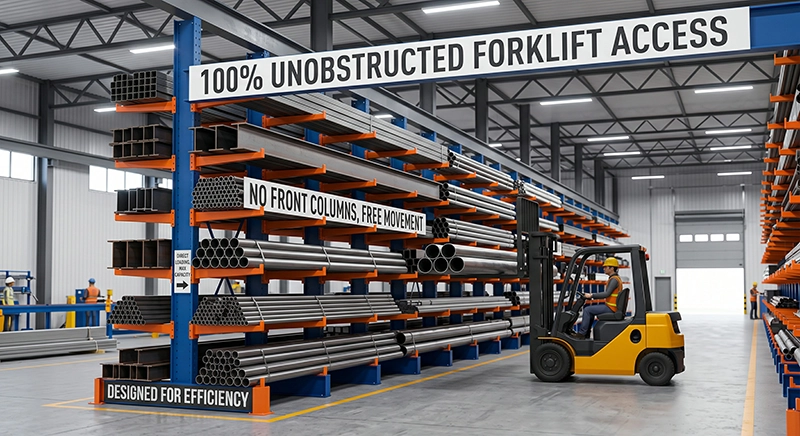
O que muda depois que a baía é consertada
When the rack plan is right, the shop stops fighting its own stock.
- Less batch confusion.
- Less re-handling of the same plate.
- Less moisture and crush damage on the bottom sheets.
- Less time wasted pulling stacks apart.
That is where the value shows up. Not in slogans. In fewer damaged sheets, cleaner FIFO, and fewer ugly surprises when the next order comes due.
Checagem de Realidade
This is not a magic fix. There are still some hard rules.
1) A sloting ainda importa
Long plate, odd widths, and heavy bundles need a real plan. If the stock mix is sloppy, the rack will only organize the mess.
2) O carregamento do chão importa
A laje tem que suportar o peso. Concreto fraco ou irregular é um péssimo ponto de partida.
3) A disciplina de lidar ainda é importante
Sem atalhos. Nada de lotar a baía. Nada de “a gente resolve depois”. É assim que os sustos continuam acontecendo.
4) Não é para todo layout
If the site is trying to run a fully different automation concept, a manual cantilever layout may need a different slotting plan to fit.
O que a equipe deve verificar a seguir
- Where are cut sheet batches getting buried?
- Which bundles are getting crushed at the bottom?
- Onde ficam os pontos de fixação dos corredores?
- How much time gets spent moving plate just to reach the next batch?
Se essas respostas forem feias, o layout precisa de uma revisão adequada, não outra promessa de que o próximo turno vai resolver.
Need the Layout Plan or a Quote?
Upload your workshop area and heaviest pack weight. We will review the layout and send back practical advice.

 EN
EN  DE
DE  RU
RU  NL
NL  PT
PT  JA
JA  ES
ES  IT
IT