
If you’ve ever tripped over a pile of pipes or squeezed past a stack of lumber in your workshop, muttering, “I’ve got nowhere to put this stuff,” then this will sound familiar. Many of us have been there—a small workshop can feel more like a frustrating game of Tetris than a productive workspace. Every new batch of stock—wood strips, thin pipes, metal rods—turns into a puzzle: how do you cram it all in without turning it into a chaotic mess? This isn’t about some pricey shelving unit; it’s about finding a practical solution that works for your space. Let’s figure out how to fit more stock in less space and keep things organized.
The Squeeze That Drives You Nuts
Last month, a local craftsman, John from “Oakwood Designs,” brought in 20 new 6-foot oak strips for a furniture project. He looked around his workshop—the floor was cluttered, the walls were packed, and the workbench was buried. Trying to shove them in a corner knocked over a pile of PVC pipes. Stacking them on a shelf pushed a box of screws to the floor. It wasn’t just tight; it was chaos. By the time he found a spot, he had wasted 30 minutes and bent two strips. That’s the small-space struggle: every inch is a battle, and more stock means more madness. You can’t work if you can’t move, and you can’t grow if you can’t store.
In a small shop, stock like thin pipes, wood strips, or metal bars is the worst offender. They’re long, awkward, and pile up fast. Spread them out, and you’re out of floor space. Stack them flat, and they can warp or bury what’s underneath. Lean them loosely, and they spill everywhere. Many professionals have lost hours digging for one piece, only to find it crushed or missing. And buying more space? That’s not always an option when the budget is as tight as the workspace. What’s needed is an efficient system, like a armazenagem em estantes verticais solution, to pack in more without the chaos.
Why Space Fights Back
Long, skinny materials hate small spaces. Lay them flat, and they eat up the floor—10 six-foot pipes spread out can take up 60 square feet easily. Stack them, and you’re limited by height or weight; an old shelf might buckle under 50 pounds. Lean them against a wall, and they fan out, stealing 3-4 feet of depth. Chaos creeps in fast: materials get mixed up, pieces get bent, and there’s no way to grab what’s in the back. One fabricator spent 45 minutes untangling a corner pile for a 4-foot steel rod, only to find it scratched. Time is lost, stock suffers, and a small workshop becomes a chokehold.
How to Crack the Code
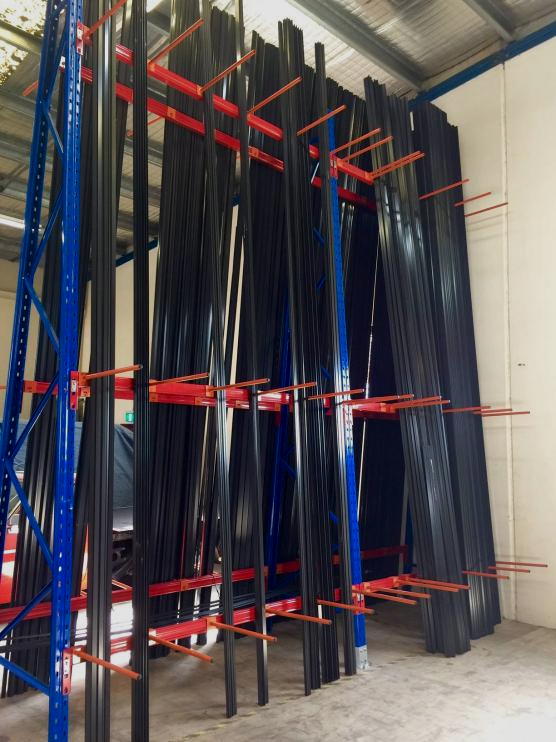
One day, staring at a messy pile of stock, the solution became clear: use the height, not the floor. Small spaces don’t give you width, but they often have vertical potential. Why fight for ground space when you can go up? By building a narrow, tall frame—perhaps 6 feet high, 2 feet wide, and 1 foot deep—you can create an effective armazenagem em estantes verticais system. Angling it slightly and adding dividers for different materials keeps everything organized and accessible. Suddenly, 20 pieces can fit into just 2 square feet, with no pile and no chaos.
With this approach, you can walk in, spot a 5-foot pine strip, and slide it out in 10 seconds. No tripping, no digging. Adding a second frame along another wall can double the capacity while using minimal floor space. The floor is clear, the workbench is usable, and the workshop can breathe again. No more warped stock or lost time.
Your Space-Saving Blueprint
Here’s how to fit more stock in less space, chaos-free—with real steps for a small shop:
- Go Up, Not Out: Build or install a tall, narrow frame. A simple wooden structure can cost as little as $20 in lumber and screws. It utilizes vertical space to save your valuable floor area.
- Divide and Rule: Add slats or bars to create slots that keep different material types separate. This prevents tangles and makes it easy to find what you need.
- Pin the Base: A small lip at the bottom of your rack stops materials from sliding out. You can also bolt the unit to the wall for added stability.
- Secure the Load: A simple bungee cord or rope across the front is a cheap and effective way to ensure nothing tips over.
- The Real Savings: The old way of storing 20 pieces flat could take up 30 square feet and lead to 10% of stock warping (costing $10/month) and 30 minutes of lost time per job. At $25/hour, that’s over $1,500 a year lost. The new way stores 40 pieces in 4 square feet with no damage and quick access, saving money and reclaiming 90% of your space. A small investment pays for itself in days.
The Freedom You Gain
Imagine your next project. You need a 6-foot steel rod and a 4-foot oak strip. You walk in and grab both—straight, ready, in 20 seconds. Compare that to the old way: 40 minutes of digging, a possibly bent piece, and a cluttered floor. Now you have space to move, stock that’s ready to use, and time to focus on your work. A simple vertical storage solution can double your capacity, eliminate chaos, and save you over a thousand dollars a year. The workshop might still be small, but it will feel efficient and under control.

 EN
EN  DE
DE  RU
RU  NL
NL  PT
PT  JA
JA  ES
ES  IT
IT