
Procurement checklist — Smrack Vertical Sheet Storage Tower: 6 Checks to Confirm Before Purchase
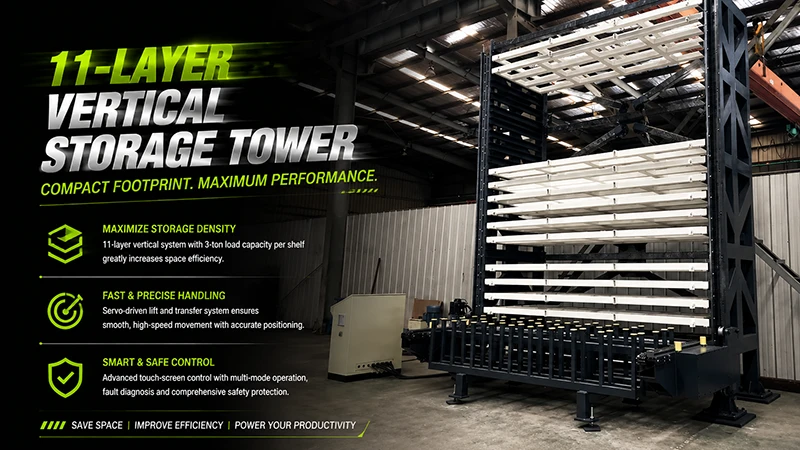
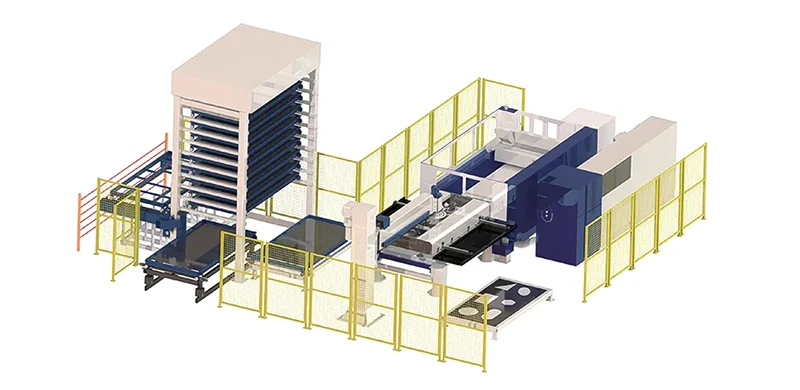
Before you compare price, lock six items: sheet size, layer load, site height, power, drive mode, and safety plus contract terms. Smrack is an 11-layer single-tower system for 2500 x 1250 mm sheets, 3 tons per layer, and servo-driven lifting; it does not provide single-sheet independent access.
-
- Standard sheet size
- 2500 x 1250 mm
-
- Layers and load
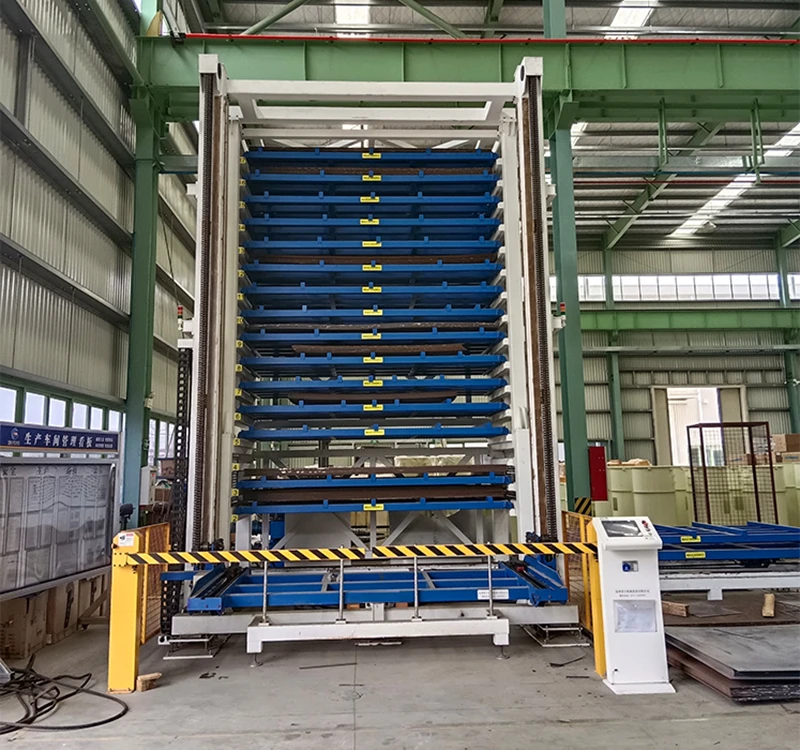
- 11 layers; 3 tons per layer
-
- Overall height
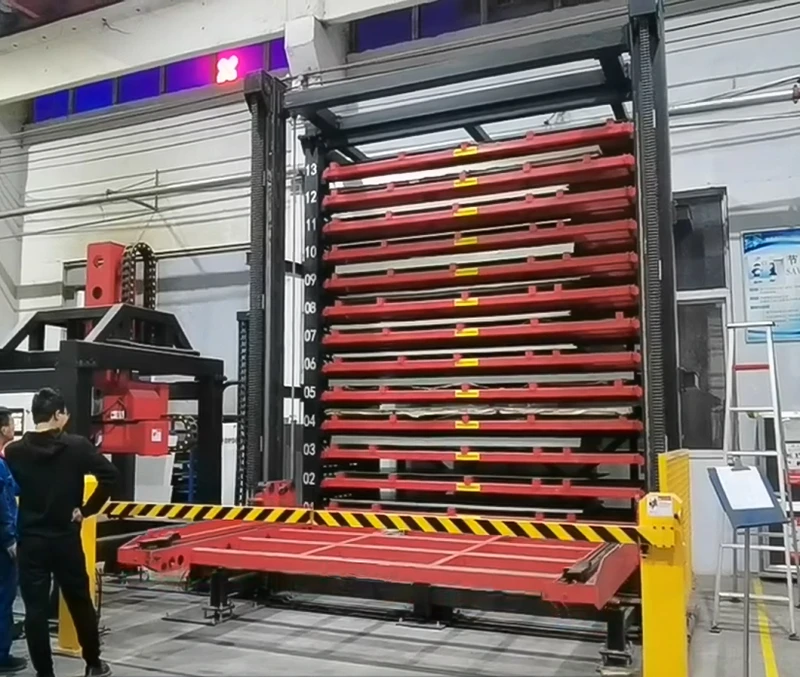
- 5025 mm
-
- Site clearance reference
- Original project layout used 5.9 m height with 875 mm top clearance
-
- Power supply
- 380 V, 60 A, 5-core 10 mm² cable
-
- Drive and speed
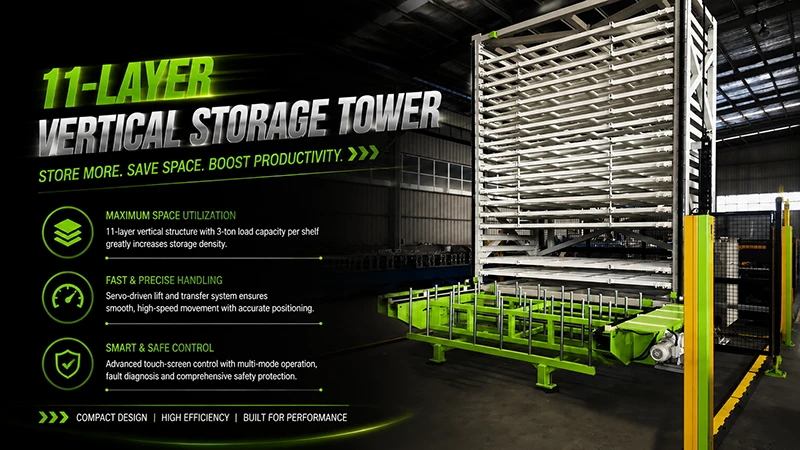
- Servo motor plus reducer; adjustable 5–10 m/min
-
- Control and safety
- Touch screen, Omron CNC controller, teach-in memory, fault diagnosis, alarms, protection, plus front safety fence and safety rod
-
- Scope boundary
- Controlled multi-level storage only; no single-sheet independent access and no automatic laser coupling
01
Start with sheet size and layer load, not catalog photos
If your stock is 2500 x 1250 mm standard sheet, the tower has to match the format and the real shelf load. Smrack's 11-layer single-tower layout is built around 2500 x 1250 mm sheets and 3 tons per layer. That is the first procurement checkpoint: can each layer carry the real stack without changing the stock format? Smrack is designed for controlled multi-level storage, not single-sheet independent access, so if your process depends on individual sheet retrieval or direct laser integration, this scheme is not the right buy.
02
Check factory height and incoming power before you size the scheme
The equipment height is 5025 mm. The reference project left 875 mm at a 5.9 m building height, which is exactly the kind of clearance check that decides whether the layout works. Power also has to be confirmed early: 380 V, 60 A, and a 5-core 10 mm² supply are part of the site condition, not an optional upgrade. If headroom, aisle space, or incoming power are not fixed, the scheme changes before the price does.
03
Choose servo drive when you need controlled lift and repeatable motion
Smrack uses a servo motor and reducer for lifting and in/out transfer, with adjustable 5–10 m/min speed. The controller is a touch screen with an Omron CNC controller, teach-in memory, fault diagnosis, alarms, and protection. If your operation needs repeatable movement, controlled transfer, and status feedback, drive mode becomes a decision point. If you only need a passive rack, a manual system is cheaper; if you need controlled motion and fault handling, manual is the wrong benchmark.
04
Safety, steelwork, and delivery terms are not add-ons
The front safety fence and safety rod define the working envelope, while the body uses manganese steel pipe-and-plate welding, vibration stress relief, CNC gantry milling, and a reinforced double-frame triangular braced structure. The detail matters because procurement is not only about load. It is also about how the frame is built, how the operator is separated, and what acceptance standard the supplier will sign. Delivery, installation scope, and after-sales response remain project terms and must be written into the contract, not assumed from the brochure.
- Factories storing standard 2500 x 1250 mm sheets that need controlled vertical storage in limited floor space.
- Procurement teams that want a quote only after sheet size, layer load, headroom, power, drive mode, safety, and delivery scope are confirmed.
Request the working-condition checklist and proposal
Send your site conditions for a Smrack scheme
If you can confirm sheet size, stack weight, headroom, incoming power, drive preference, safety requirement, and contract scope, Smrack can be quoted as a matched scheme instead of a generic rack. Share the working conditions and request the proposal that fits your factory.
Submit sheet size, layer load, site height, power supply, and required delivery scope.

 EN
EN  DE
DE  RU
RU  NL
NL  PT
PT  JA
JA  ES
ES  IT
IT