

In a high-volume steel service center, equipment longevity isn’t just about depreciation—it’s about operational continuity. When you are moving 20-foot honed bars or bundles of 316L stainless tubing every hour, a bent upright means downtime.
Unlike static racks that succumb to “forklift jousting” within a few years, a well-engineered rolling cantilever system is designed to outlast the very machines that feed it. Here is the engineering reality behind the lifespan of a crank-out system.
The “Forklift Factor”: Why Static Racks Die Young
To understand how long a rolling rack lasts, we first need to acknowledge why traditional static cantilever racks fail. In a typical fabrication shop or tube distribution center, the lifespan of a static rack is directly correlated to the skill of your forklift drivers.
When loading a 6,000 lb bundle of square tubes into a static rack, the driver must navigate a 40-foot wide load down an aisle and “spear” the material into a slot with limited clearance. The result? Constant impact on the uprights and arms. This leads to structural fatigue, compromised welds, and eventually, a failed safety audit.
The Rolling Advantage: With a 伸縮カンチレバーラック, the forklift (or preferably, the overhead crane) never enters the rack structure. The drawers roll out 100% into the aisle. You drop the load vertically using a crane. Zero impact. Zero collision risk.

Figure 1: By allowing overhead crane access, we eliminate the forklift impacts that typically destroy rack uprights.
Mechanical Durability: Designed for the Cycle, Not Just the Load
A common misconception is that moving parts wear out faster than static parts. In the context of heavy industrial storage, the opposite is true if the engineering is sound. A rolling rack is a machine, not just a shelf.
The lifespan of a Tcrack system depends heavily on the quality of the transmission assembly. We utilize high-load bearing housings and a solid steel transmission shaft that connects the gears across all uprights. Whether you have a 4-column unit for 12-foot bars or an 8-column unit for 24-foot extrusions, the synchronized shaft ensures the drawer extends evenly without “crabbing” or binding.
Standard design life for these mechanical components, assuming routine greasing of the rack and pinion, exceeds 10 to 15 years of daily heavy cycling. The bearings are sealed against metal dust and grinding swarf, common in saw shops.

Figure 2: The heart of the system—a synchronized transmission shaft and gear system designed for decades of cycles.
Structural Integrity: Fighting Deflection Over Time
For Steel Service Centers dealing with long stock—like 20-foot polished shafts or aluminum extrusions—deflection (sagging) is the enemy. Over time, overloaded static arms can permanently deform (creep).
Our rolling racks are engineered with Q235 carbon steel or structural H-beams, specifically calculated to handle the dynamic moment load when the drawer is fully extended. For example, a drawer rated for 6,600 lbs (3,000 kg) is tested to ensure that when fully rolled out, the tip deflection remains within safe tolerances. This prevents the “droop” that causes drawers to become difficult to crank back in over time.
Furthermore, for ultra-long materials (20ft+), we deploy multi-column configurations (6 or 8 uprights) to distribute the load. This prevents the material itself from sagging between arms, which preserves both your inventory straightness and the rack’s longevity.
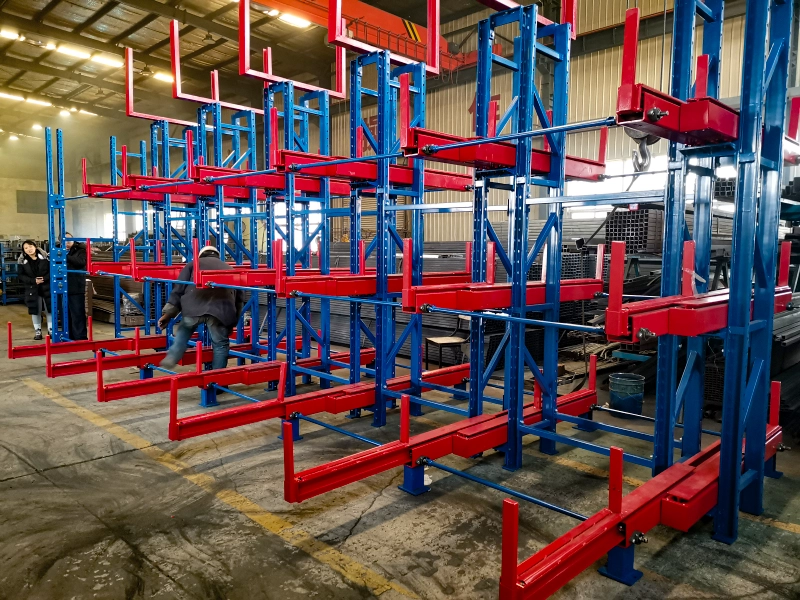
Figure 3: An 8-column configuration minimizes material deflection and stress on individual arms, extending structural life.
Surface Protection in Harsh Environments
Metal fabrication environments are hostile. Coolant mist from band saws, grinding dust, and humidity from open bay doors can corrode standard paint quickly. Once rust sets into the moving tracks, the rack becomes a liability.
To ensure the rack lasts as long visually as it does mechanically, we utilize a rigorous Electrostatic Powder Coating process (typically RAL 7016 Grey and RAL 2008 Orange). Before coating, the steel undergoes shot blasting to remove mill scale and welding spatter. This bond is significantly more resistant to chips and scratches than standard wet paint. For outdoor storage yards, hot-dip galvanization options are available to provide 20+ years of corrosion resistance.

Figure 4: High-quality powder coating and stop blocks ensure the rack withstands industrial abuse while protecting inventory.
Summary: The Verdict
So, how long does it last? A properly maintained crank-outカンチレバーラック in an indoor facility should remain fully operational for 15 to 20 years. The primary wear components (bearings) are easily replaceable, meaning the structural skeleton can serve your facility indefinitely.
よくある質問
|
1. How often do the gears and racks need lubrication? In a standard clean warehouse, greasing the rack and pinion gears once every 6 months is sufficient. In environments with heavy grinding dust or plasma cutting smoke, we recommend a quarterly inspection and cleaning to prevent debris buildup in the gear teeth. |
|
2. Can we replace just the bearings if they wear out after 10 years? Yes. The bearing housings are bolted, not welded shut. This modular design allows your maintenance team to swap out bearings without dismantling the entire upright structure, extending the asset’s life significantly. |
|
3. We store polished stainless steel bars. Will the arms scratch them over time? The steel arms themselves are durable, but to protect sensitive inventory like 316L stainless or aluminum, we recommend adding our optional UHMW-PE or rubber liners to the arms. This prevents metal-on-metal contact and carbon contamination. |
|
4. What happens if an operator accidentally overloads a drawer? The crank mechanism provides natural tactile feedback. If a drawer is significantly overloaded, the resistance on the crank handle will increase noticeably, acting as a warning. While the structure has a safety factor (usually 1.5x), chronic overloading will accelerate bearing wear and cause arm deflection. |
|
5. Is the floor anchoring permanent? We use heavy-duty chemical or expansion anchors. While secure, they can be removed. If you reconfigure your shop floor layout (e.g., moving the saw line), the racks can be unbolted and relocated. The rigid frame design makes them easier to move than disassembled static racking. |

 EN
EN  DE
DE  RU
RU  NL
NL  PT
PT  JA
JA  ES
ES  IT
IT