

Stop scrapping expensive aluminum due to surface damage.
Storing aerospace-grade aluminum bars or anodized profiles on the floor is a recipe for disaster. Forklift forks scratch soft surfaces, and “digging” for the right alloy bundle wastes hours of production time. Our customized roll-out solution allows for overhead crane access, ensuring your 6061 and 7075 aluminum stock remains pristine while reclaiming 50% of your floor space.
The Hidden Cost of Storing Aluminum Bars: Scratches and Dead Space
Unlike structural steel, aluminum bars and profiles require a higher level of care. Whether you are handling raw billets, precision-ground bars, or finished architectural profiles, the material is softer and highly susceptible to impact damage. In a traditional warehouse setup, bundles are often stacked on the floor or in static cantilever racks.
The problem? Retrieving a specific bundle from the bottom of a stack requires moving everything above it. This multiple handling increases the risk of gouges and scratches—fatal defects for anodized or polished products. Furthermore, static racks force you to use forklifts. Maneuvering a 20-foot aluminum bar through a narrow aisle with a forklift is a safety nightmare and a primary cause of material bending and facility damage.

Figure 1: High-density storage of sensitive materials without stacking damage.
Why “Roll Out” is the Standard for Precision Metal
Il Customized roll out cantilever rack for aluminum bars fundamentally changes how you access inventory. Instead of driving a forklift into the rack, the rack comes out to you.
Using a high-ratio gear and rack transmission system, a single operator can rotate a crank handle to extend a fully loaded arm (up to 6,600 lbs capacity) 100% into the aisle. This creates a clear vertical path above the material.
The Overhead Crane Advantage
Once the drawer is extended, you can use your shop’s overhead crane (bridge crane) or jib crane. By using nylon slings or vacuum lifters instead of steel forks, you eliminate metal-on-metal contact. This is critical for maintaining the surface finish of 316L stainless or aluminum alloys. The crane lifts straight up, preventing the friction damage caused by sliding bundles out of a static pigeonhole rack.

Figure 2: 100% extension allows for vertical picking via overhead crane, eliminating forklift damage.
Defeating Deflection: Customization for 20ft+ Profiles
Aluminum has a lower modulus of elasticity compared to steel, meaning it sags (deflects) more easily when not properly supported. A standard 2-column or 3-column rack is often insufficient for 20-foot (6-meter) or 40-foot (12-meter) aluminum extrusions. Over time, this sagging can cause permanent deformation, rendering the stock unusable for precision machining.
Our customized solution addresses this by increasing the density of the upright columns. We can configure systems with 4, 6, or even 8 uprights. This reduces the unsupported span of the material, keeping your bars perfectly straight. Additionally, to prevent galvanic corrosion (the reaction between carbon steel racks and aluminum stock), we can customize the arms with UHMW plastic liners or rubber pads.
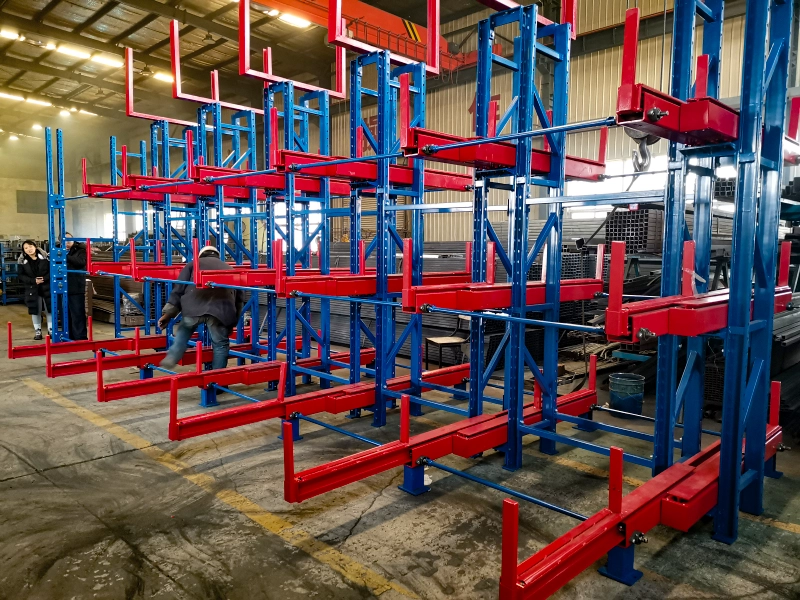
Figure 3: Multi-column design (8 uprights) specifically engineered to prevent sagging in long aluminum profiles.
Operational Efficiency: From 15 Minutes to 2 Minutes
In a busy fabrication shop, waiting for a forklift driver to move three pallets just to get to the raw material you need is a bottleneck. With a crank-out system, the machine operator can walk to the rack, crank out the specific level containing the required alloy, and load it directly onto the saw or CNC feed table using a jib crane.
The mechanism is designed for ergonomics. Despite holding thousands of pounds, the gear reduction allows for smooth, low-effort operation. This autonomy speeds up changeovers and keeps your expensive laser cutters and CNC mills running, rather than waiting for material.

Figure 4: Ergonomic crank handle allows single-operator access to tons of material in seconds.
Domande frequenti
|
Q: How do you prevent the aluminum from reacting with the steel rack? A: For sensitive aluminum or stainless steel storage, we can customize the cantilever arms with rubber strips, wood liners, or UHMW plastic covers to eliminate metal-to-metal contact and prevent galvanic corrosion. |
|
Q: Can this rack handle 40-foot (12-meter) extrusions without them bending? A: Yes. We customize the number of vertical columns based on the length and flexibility of your material. For 12-meter aluminum, we typically recommend an 8-column configuration to minimize deflection and ensure the material stays straight. |
|
Q: What is the weight capacity per arm for aluminum bars? A: Our systems are heavy-duty. Depending on your needs, we can engineer arms to hold anywhere from 1,000 lbs to 6,600 lbs (3,000 kg) per level, fully extended. |
|
Q: Do I need a forklift to load this rack? A: No. The primary advantage of this system is that it allows for 100% overhead access. You can use your facility’s overhead crane or a vacuum lifter to load and unload, which is safer and prevents surface damage. |
|
Q: How much aisle space do I need to leave in front of the rack? A: Significantly less than a forklift setup. You only need enough space for the drawers to extend (typically the depth of the arm) plus a safe walkway for the operator. You do not need the 12-15 foot turning radius required for a heavy-duty forklift. |

 EN
EN  DE
DE  RU
RU  NL
NL  PT
PT  JA
JA  ES
ES  IT
IT