
If you’ve ever spent half an hour pawing through a heap of pipes or lumber, sweaty and swearing under your breath because you know the piece you need is in there somewhere, then you’ll get where I’m coming from. That used to be me—every single job in my little workshop turned into a treasure hunt. I’d have pipes scattered across the floor, leaning against walls, or piled up in a corner, and by the time I found what I needed, I’d be too ticked off to even enjoy the work. It wasn’t just annoying—it was eating my time, my patience, and sometimes my paycheck. I’m done with that chaos now, and I want to walk you through how I got there.
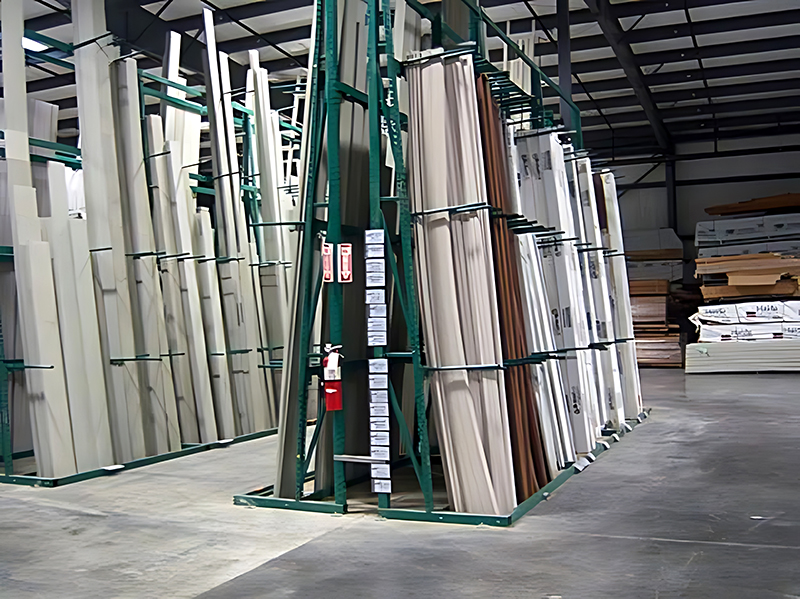
The Mess That Broke Me
Picture this: I’m in my garage workshop, a deadline is looming, and I’m trying to finish a custom railing for a client, let’s call him Mr. Peterson. I need a 5-foot length of stainless steel pipe, and I’m sure I’ve got it. But my pipes? They’re a disaster—some stacked on a rickety shelf, others slumped against the wall, a few buried under a tarp. I start digging. Ten minutes in, I’m pulling out bent pieces, knocking over half the pile, and realizing the one I want is either missing or trashed. I lost 45 minutes, had to run to the hardware store, and still delivered late. The client wasn’t thrilled, and I wasn’t either—I’d just burned time and money on something I should’ve had under control.
That wasn’t a one-off. In a small workshop, long materials like pipes, tubes, or wood strips turn into a nightmare fast. You’ve got different lengths, materials, and thicknesses. Pile them together, and it’s a jumbled mess. Lean them up, and they slide down. Stack them flat, and good luck finding anything without moving the whole lot. Every job started with that same sinking feeling: “This is gonna take forever.” I’d waste 20 minutes here, an hour there, and it added up—hours I could’ve spent building, not searching.
Why It’s Such a Time Suck
Here’s what I figured out: the problem isn’t just the mess—it’s how long, skinny materials behave. They’re awkward. Stack them horizontally, and you’ve got to lift or shift everything to get at the bottom. Lean them against a wall, and they fan out or collapse the second you touch them. Mix in a dozen types and you’re not just digging, you’re sorting too. Add a tight space (my garage is barely 10 by 15 feet), and it’s game over. It hit me: I wasn’t just disorganized; I was fighting a setup that didn’t fit my reality. I needed a professional solution, something like vertical material storage racks to truly get organized.
How I Cracked It
One day, fed up, I stepped back and thought, “What if I stop treating these like a pile and start treating them like a system?” The lightbulb moment was simple: stand them up. Not flat, not leaning willy-nilly—upright, so I could see everything at a glance. This is the core principle behind efficient vertical material storage racks, and it’s a game-changer. I improvised with an old metal bed frame I’d been meaning to scrap. Propped it against the wall, added a couple of crossbars from scrap wood, and leaned my pipes against it. I looped a bungee cord across the front to hold them in place. It took me an hour to set up, and it changed everything.
Now, when I walk in, my pipes are lined up like soldiers. I can spot a 5-footer in seconds, slide it out, and get to work. No more digging, no more chaos. That first job after the switch? Found my piece in under a minute and finished early. It felt like I’d hacked my own workshop.
Fine-Tuning the Details
Once I saw it worked, I dialed it in. Here’s the nitty-gritty of how I keep it fast and functional in my small space:
- Angle It Right: I lean them at about 30 or 40 degrees against the frame. It keeps them stable and lets me see everything.
- Split Them Up: I use crossbars to make sections—one for each type or length. It’s like drawers in a toolbox.
- Lock the Bottom: I nailed a 2-inch strip of wood along the base like a little curb. It keeps them from shifting.
- Keep It Simple: My setup is ugly, but it does the job. You don’t need to overbuild. The goal is function.
- The Math of Time Saved: Let’s break it down. Old way: 20-40 minutes per job digging through piles. New way: 30 seconds to a minute per grab. Over a week, I’m saving hours—enough to finish an extra project.
The Real Win
Last week, a client dropped by unannounced needing a quick fix—two 4-foot copper pipes for a display rack. Old me would’ve panicked. New me? Walked over, slid them out, and handed them over in under two minutes. He grinned and said, “You’re on top of it,” and I felt like I actually was. That’s the payoff—not just the time, but the calm. If you’re tired of the mess, investing in proper storage is the answer. A good set of vertical material storage racks pays for itself in saved time and sanity.
Your Shop, Your Way
If you’re reading this thinking, “That’s me—wasting half my day looking for things,” then we’re in the same boat. You don’t need a big overhaul—just a shift in thinking. Next time you’re staring at that tangle of materials, ask: “How can I stand these up and see them?” Whatever the solution, make it fit your space and your workflow. We’re all just trying to work smarter, not harder, right?

 EN
EN  DE
DE  RU
RU  NL
NL  PT
PT  JA
JA  ES
ES  IT
IT