
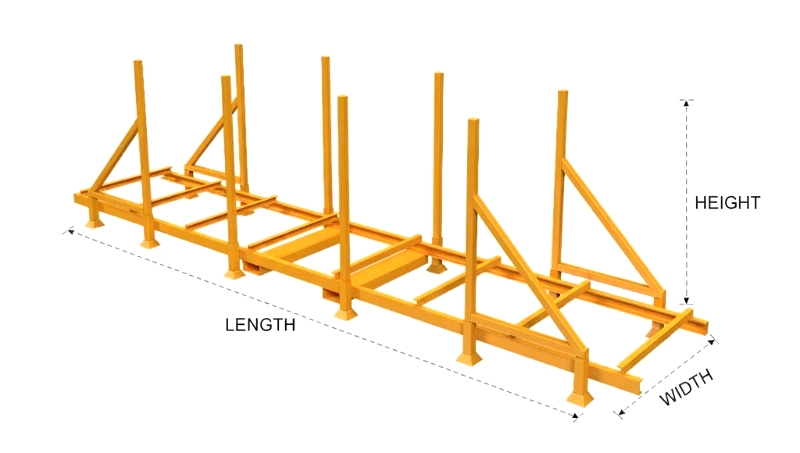
A lot of storage decisions are made too early and with too little data. For long-material yards, the safer approach is dimension-driven planning. Rack length, width, height, load, and forklift limits should all be considered before a layout is locked in.
Why Guesswork Causes Expensive Storage Mistakes
Yards that choose storage by instinct often end up with the wrong rack height, poor aisle fit, or unsafe load distribution. That leads to wasted space, awkward forklift handling, and layouts that are difficult to correct later.

Start with the Real Limits
Good planning starts by measuring the maximum material length, bundle weight, forklift fork width, lift height, and ground conditions. Once those numbers are clear, rack dimensions can be matched to the real site instead of to assumptions.

Planning Makes Storage Safer and More Efficient
Dimension-driven layout work helps avoid oversized racks, undersized structures, and risky stacking choices. It also makes communication easier between yard managers, forklift teams, and suppliers.
- Improves rack-to-site fit
- Reduces layout guesswork
- Supports safer forklift handling
- Helps define realistic stack heights and loads
Planning a New Yard Rack Project?
Send us your longest material size, target load, and forklift data. We can help you turn those measurements into a more reliable storage plan.

 EN
EN  DE
DE  RU
RU  NL
NL  PT
PT  JA
JA  ES
ES  IT
IT