
Glass Processing Workshops
Glass sheets do not fail on the cutting line first. They usually get damaged earlier, during storage and handoff. When operators have to lean panels against a wall or pull them from a messy pallet stack, edges get knocked, aisles get tight, and the whole bay slows down. Aplarack keeps sheets upright in roll-out drawers, gives the team full-extension access, and leaves the workshop easier to move through.
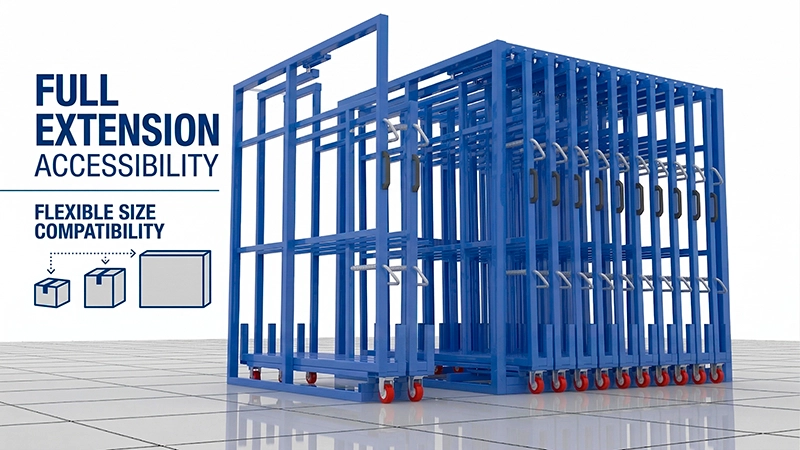
Full-Extension Access Beats Floor-Leaning Stacks
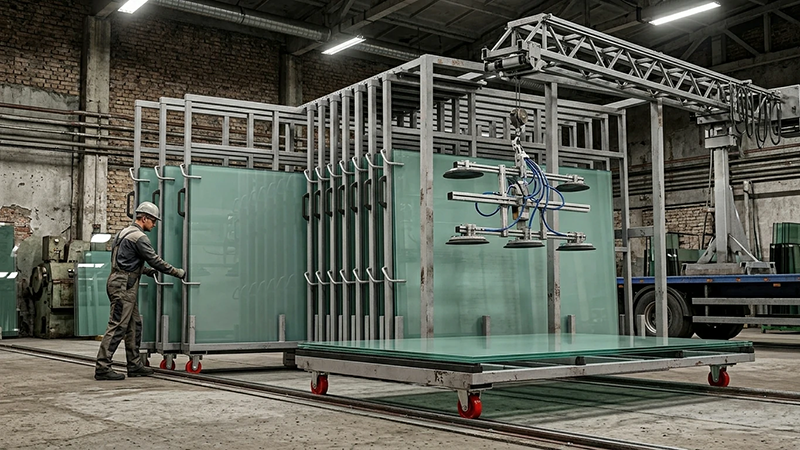
In a glass workshop, the old habit is simple: lean the sheets where they fit and hope the next person does not bump them. That works until the bay gets busy. Aplarack changes the routine. The drawer pulls all the way out, so operators can reach one sheet without fishing through the next stack, and the top stays open for crane or vacuum lifter access. The image here shows the rack at full reach, which is the part that matters when the sheet is long, fragile, and awkward to turn by hand.
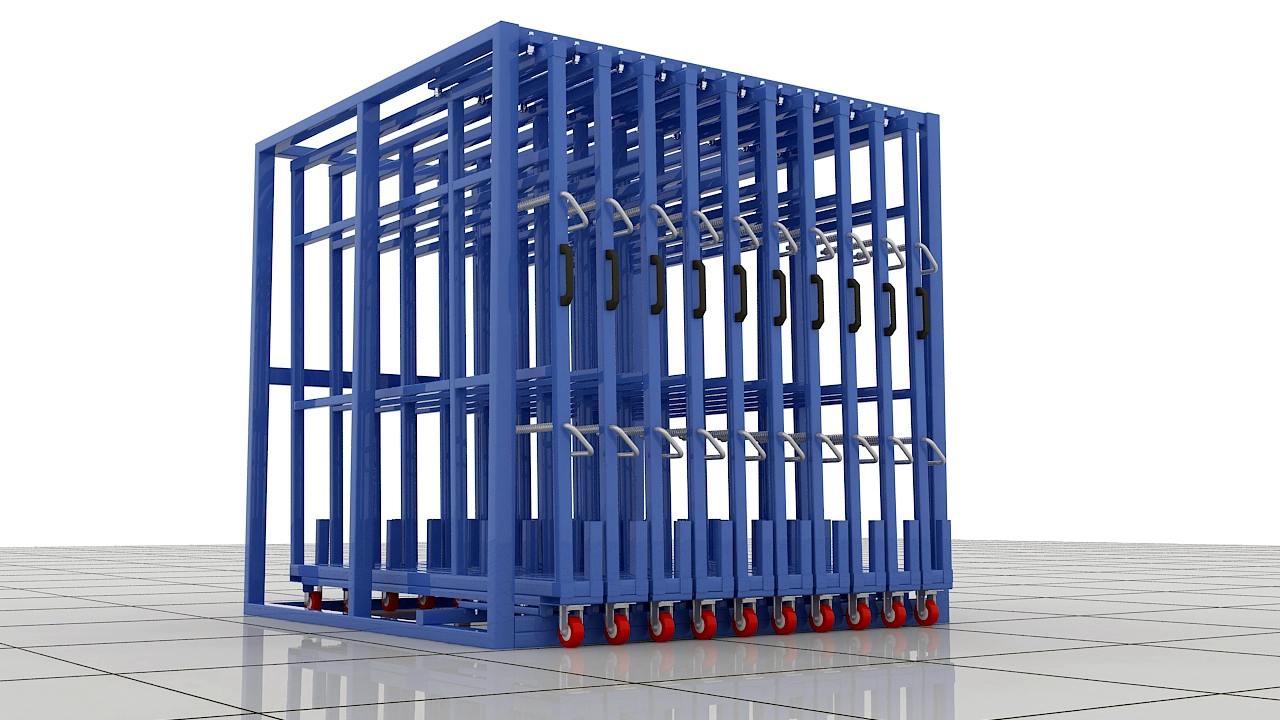
Workshop Flow Improves When the Rack Moves Like Equipment, Not Furniture
Glass processing bays need clear lanes for carts, lift tables, and people carrying finished parts. A fixed rack can sit in the way and become part of the problem. The workshop photo proves the opposite: Aplarack is built as a real floor unit with heavy-duty casters, so the storage point can be shifted when the line changes or the bay needs cleaning. The frame is not decorative. It is a working Q235 steel structure that belongs in the same space as cutting, edging, and dispatch.
That is why the customer sees a better floor plan, not just a better storage unit. The rack takes the vertical load and leaves the horizontal space less crowded.
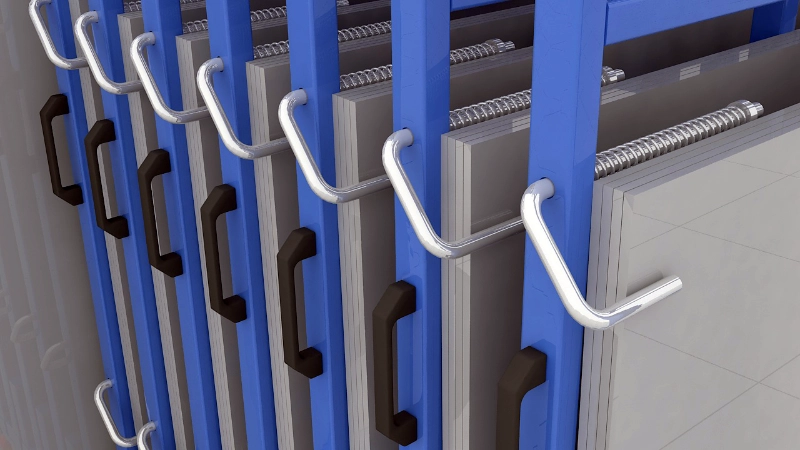
Safety Hardware Matters When Sheets Are Tall and Heavy
Big glass sheets punish small mistakes. A drawer that rolls too far or a frame that shifts when it should not can turn a simple pick into a repair job. The safety close-up shows the part people usually ignore: spring-loaded locking pins and a handle that holds the drawer where it should stay. That is the detail that keeps the rack controlled when the operator stops mid-task or when the bay gets crowded.
For a workshop, this is not an add-on. It is the difference between a storage system that feels stable and one that keeps everybody guessing.
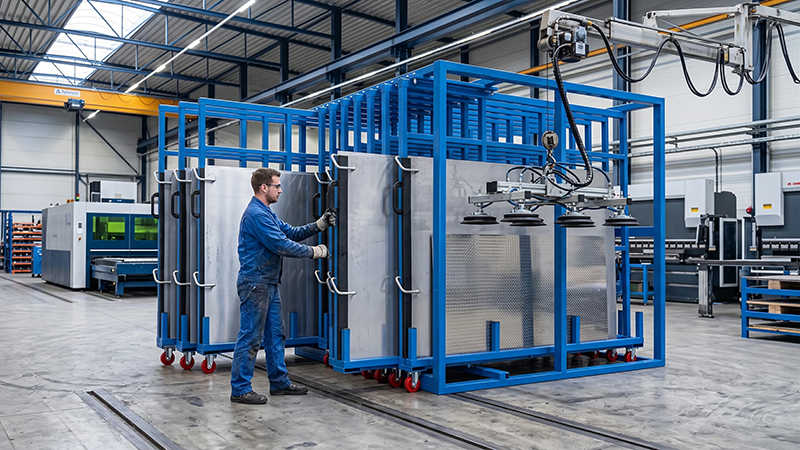
Glass Panels Still Need Headroom for Crane Pickup and Clean Handover
The last image is the best proof for a glass plant: it shows real panels in storage, not just a render. The top remains open, so overhead handling stays possible, and the drawer layout keeps the sheets upright while the team works. That matters when the bay uses a vacuum lifter, a crane, or a mixed handling routine. The rack holds the load; the handling method stays familiar.
By the time the sheets reach cutting or dispatch, the team has already avoided the usual damage points: rubbing, tipping, and forced re-handling.
- Glass cutting and edging workshops that need upright storage before the first cut.
- Inspection, buffer, and dispatch bays that need cleaner aisles and faster sheet retrieval.

 EN
EN  DE
DE  RU
RU  NL
NL  PT
PT  JA
JA  ES
ES  IT
IT