

|
Your fiber laser sits idle, waiting. Your best operator is tied up with a forklift driver, dangerously shuffling through a heavy stack of steel plates just to find one specific remnant. This 20-minute delay happens multiple times a day, killing your machine uptime and creating a safety nightmare. There is a 2-minute, one-person solution. |
Stop “Sheet Shuffling”: How a One-Person Rack Feeds Your Laser Cutter Non-Stop
In every sheet metal fabrication shop, there’s a hidden bottleneck that silently bleeds profit: the chaos of raw material storage. We’re talking about the “graveyard” of floor-stacked plates—a jumble of full sheets, valuable remnants, and different gauges of steel, stainless, and aluminum. When a hot job hits the floor, the frantic search begins. An operator and a forklift driver spend the next 20 minutes playing a high-stakes game of Jenga, moving heavy plates just to access the one buried at the bottom.
This isn’t just inefficient; it’s a direct drain on your bottom line. Every minute your expensive Fiber laser cutting machine or press brake waits for material is a minute you’re not making money. Add the constant risk of scratches on high-finish stainless steel, the safety hazards of unstable stacks, and the sheer waste of valuable floor space, and the problem becomes critical.

The Logic: From Two-Man Chaos to One-Person Control
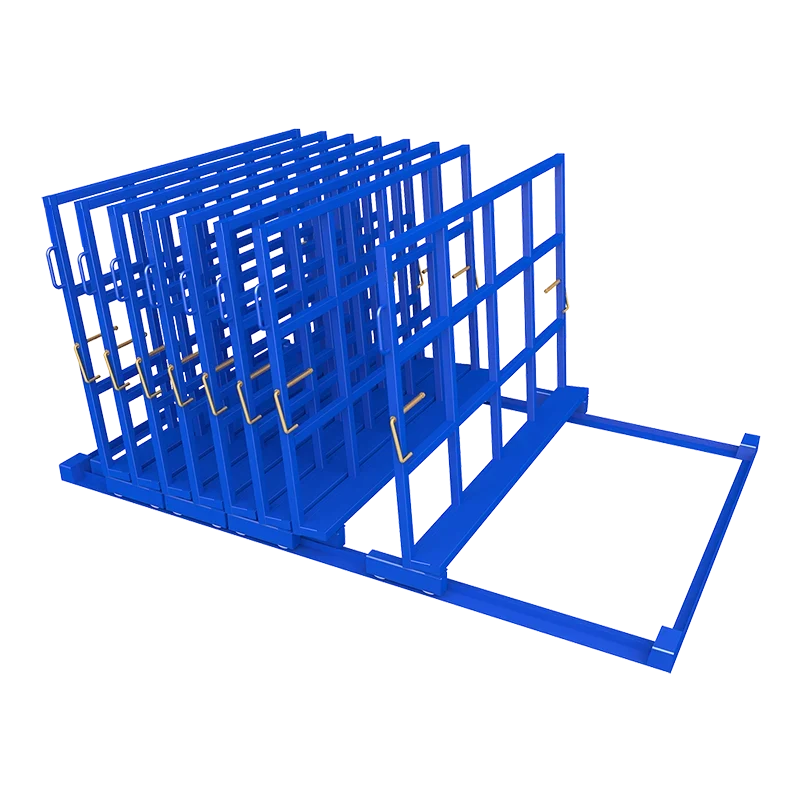
The solution lies in fundamentally changing how you interact with your inventory. Instead of stacking horizontally, you store vertically. Instead of fixed, space-wasting aisles, you create a single, dynamic one exactly where you need it. This is the core principle behind the Manual Mobile-Aisle Vertical Sheet Rack System.
It’s not just a rack; it’s a workflow machine built on three key principles:
1. Density Reclaims Your Floor Space
By storing steel plates upright in individual, movable drawers, the system eliminates the need for multiple permanent forklift aisles. The entire storage block remains a compact, solid cube until you need to access it. This Compact sheet metal storage design can reclaim up to 70% of the floor space previously lost to disorganized ground stacking, giving you room for a new welder, a deburring machine, or simply a safer, more open workspace.
2. Mechanical Advantage Ends Forklift Dependency
The title says it all: this is a **one-person sheet metal handling** solution. How can a single operator move a 3-ton drawer of heavy steel plate? The answer is a robust gear-and-rack drive mechanism. A simple hand crank multiplies the operator’s force, allowing them to glide a fully loaded drawer open or closed with minimal effort. This means no more waiting for a certified forklift driver to become available. Your laser operator can retrieve their own material, safely and immediately.
3. 100% Selectivity Gives You Instant Access
Once the operator opens an aisle, they create a clear, unobstructed window to the exact material they need. Your existing Overhead crane, equipped with a vacuum lifter or lifting magnet, can descend directly into the gap and pick the sheet. Every single plate, from the first to the last, is 100% accessible. The 20-minute “sheet shuffle” is replaced by a standardized, predictable 2-minute retrieval process.

The Result: More Parts Shipped, Less Scrap, and a Safer Shop
Implementing a Sliding sheet metal storage rack transforms your raw material area from a cost center into a competitive advantage.
- Increased Machine Uptime: By slashing material retrieval time by up to 90%, you feed your high-value machines faster, directly increasing their output and your profitability.
- Drastically Reduced Material Damage: Vertical, separated storage means no more surface scratches on expensive aluminum or stainless steel sheets from being dragged across a stack. This is the definition of a Scratch-free metal sheet racking system.
- A Safer Work Environment: The engineered system, with its anti-tilt mechanisms and controlled movement, eliminates the primary cause of material handling accidents—unstable, collapsing stacks of heavy plates. This is a Safe sheet metal storage system that your EHS manager will approve.
- Total Inventory Clarity: When you can see every sheet you own, you can manage your inventory effectively. No more “lost” remnants or accidentally re-ordering material you already have.
Stop letting disorganized storage dictate your production schedule. It’s time to empower your operators, maximize your machine investments, and build a safer, more efficient fabrication floor.
Frequently Asked Questions
1. How much weight can a single drawer hold?
Our standard heavy-duty drawers are engineered to handle up to 3,000 kg (approx. 6,600 lbs) of material. We can also design custom solutions for even higher load capacities based on your specific needs for storing thick steel plate.
2. Can one person really move a fully loaded 6,600 lbs drawer?
Absolutely. The system uses a gear and rack mechanism connected to a hand crank. This system provides significant mechanical advantage, reducing the physical effort required to move a fully loaded drawer to a level that is easily manageable for a single average adult operator without strain.
3. How does this system integrate with our existing overhead crane?
The system is designed to work seamlessly with standard overhead cranes, jib cranes, and gantry cranes. When a drawer is moved to create an aisle, it provides a completely open top, allowing your crane’s hook, vacuum lifter, or magnet to lower directly onto the desired sheet for vertical lifting without any obstruction.
4. What kind of foundation or floor is required for installation?
The system’s tracks must be anchored to a solid, level concrete floor. A standard industrial concrete slab is typically sufficient. Our team can provide detailed foundation requirements to ensure a safe and stable installation.
5. Can this system efficiently store our sheet metal remnants and off-cuts?
Yes, this is one of its key advantages. Each drawer acts as a separate, organized compartment. You can dedicate specific drawers to different types of remnants (e.g., “1/4 inch 304 Stainless Remnants”), making them easy to find and use. This drastically reduces scrap by ensuring valuable off-cuts are put back into production instead of getting lost in a pile.

 EN
EN  DE
DE  RU
RU  NL
NL  PT
PT  JA
JA  ES
ES  IT
IT