
I run a small warehouse—just 1,200 square feet—and for years, it felt like a losing battle. Every time a truck rolled in with 20-foot steel pipes or 33-foot rods, I’d get that sinking feeling: Where am I going to put this? My space was packed—aisles barely wide enough for a forklift, racks stuffed to the brim, and random stacks spilling onto the floor. If you’ve ever searched for a better way to manage your inventory because your shop’s bursting, I’ve lived that stress. I was drowning in metal until I found a way to achieve the эффективное хранение длинномерных материалов without moving to a bigger place.
The Tight Squeeze That Broke Me
It wasn’t always a mess. When I started, I dealt with shorter stock—like 6-foot flats, easy to tuck away on a cantilever rack. But orders changed. Clients wanted 25-foot pipes, then 40-foot rods, and my little warehouse wasn’t ready. The cantilever rack ate up half my floor; its arms stuck out, forcing me to leave wide gaps I couldn’t afford. I’d cram long pipes across two racks or lean them against walls, but that just made everything worse. My crew was dodging piles, and I was saying “no” to deliveries I needed to take.
The worst was last March. A client in Dallas needed 15 pipes—20 feet each—for a job, and I had to dig through a corner stack to find them. It took 45 minutes, two guys, and a near-miss with a sliding rod that could’ve smashed our forklift. My lead hand, Carla, looked at me and said, “Boss, we’re gonna snap if this keeps up.” She wasn’t kidding. I was losing time, money, and my grip on the place. I couldn’t afford a bigger warehouse—rent’s brutal—and I couldn’t keep turning away business. I needed a way to make my 1,200 square feet act bigger.
What I Needed (and Couldn’t Find)
I started asking around—other small-shop owners, a buddy who runs a fabrication yard in Houston. What kept coming up was this:
- I needed to fit long stock—20 to 40 feet—without eating my floor.
- I wanted to grab what I needed fast, not play hide-and-seek.
- I had to stay under budget—no fancy fixes or new leases.
Cantilever racks were a bust—too bulky, too much dead space. Floor stacking was a nightmare; I’d spend half an hour just finding one pipe. I looked at custom shelves, but they either couldn’t handle 2-ton loads or cost more than my truck. All I wanted was to unload a shipment and know it’d fit, without turning my warehouse into a junk pile. Was that too much to ask?
The Game-Changer I Didn’t Expect
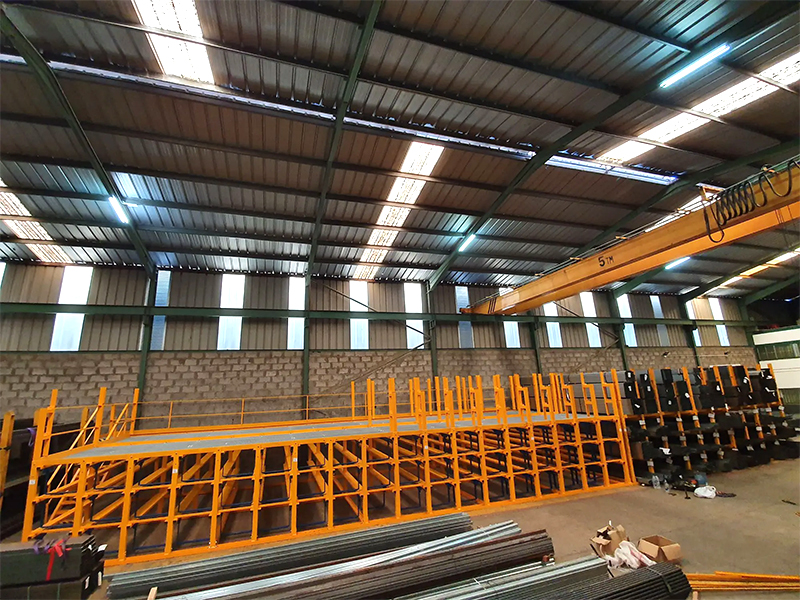
Then I got a tip from a supplier who’d seen my clutter. “Try a honeycomb rack,” he said. “It’s tight but tough.” I was skeptical, but I was out of moves. I called the specialists at SheetStorage and spilled my problem: “I’ve got 1,200 square feet and long pipes piling up. Help me out.” They didn’t oversell—just asked about my sizes and loads. A few days later, they brought in something that changed everything.
It’s not huge—about 21 feet long, 10.5 feet wide, and 12 feet high—but it’s a space wizard. The slots are compact, about 2×2 feet, stacked high to use every inch of my low ceiling. Each one has a cart that rolls out smoothly, so I can pack in 20-foot pipes or 33-foot rods without needing wide aisles. Carla loaded it up—30 pipes in a corner that used to hold 10—and it didn’t feel cramped. I fit 80 pipes total—three times what I could before—and still had room to breathe. My warehouse didn’t grow; it just got smarter.
Why It Worked for My Tiny Space
This system is a perfect example of эффективное хранение длинномерных материалов in a compact footprint. Here’s what clicked:
- Squeezes More In: Slots stack tight—80 pipes in 220 square feet, not 50 in 330 like my old rack.
- Grabs Are Quick: Three minutes to pull a pipe, not 20—no more digging through piles.
- Holds Tough: 3 tons per layer, so my heaviest stock is no problem, even in a small footprint.
It’s built solid—carbon steel that doesn’t budge—and it has guards to keep the carts from slipping, which saves me from heart attacks when we’re rushing. If my orders shift to longer stuff, I can bolt on more length—no new rack needed. I’m not squeezing my budget or my crew anymore; I’m fitting my stock and keeping the doors open.
The Fine Print That Adds Up
Let’s do the math, because I’m all about the bottom line. Here is a comparison of the old and new systems:
| Metric | Old Cantilever Rack | New Honeycomb Rack |
|---|---|---|
| Footprint | 330 sq ft (33′ x 10′) | 220 sq ft (21′ x 10.5′) |
| Вместимость | 50 pipes | 80 pipes |
| Плотность хранения | 0.15 pipes/sq ft | 0.36 pipes/sq ft |
| Avg. Время поиска | 20 minutes | 3 минуты |
| Daily Labor Cost (Retrievals) | $100 USD (at $30/hr) | $45 USD (at $30/hr) |
| Monthly Lost Revenue | ~$5,000 USD (turned away orders) | $0 |
| Total Annual Gain | – | Over $49,000 USD (Labor Savings + New Revenue) |
What I’d Tell You Straight
If your small warehouse is choking on long stock, don’t think you’re stuck leasing more space or saying no to orders. I spent too long shoving pipes in corners, thinking small meant screwed. This honeycomb rack isn’t a cure-all, but it’s the first thing that let my 1,200 square feet punch above its weight. If you’re out of room and out of patience, maybe give the team at SheetStorage a call. Tell them your sizes, your space—they’ll get it. I’m not preaching—just sharing what kept my business thriving.

 EN
EN  DE
DE  RU
RU  NL
NL  PT
PT  JA
JA  ES
ES  IT
IT