

Lumber is still lying flat on the ground. The wet ones are staying wet. The good stock is buried. Somebody is waving a forklift around trying to pull one bundle while three other stacks sit there getting in the way.
The Ground Keeps Winning
That is the ugly part of an outdoor lumber yard. When the material lives on the floor, the yard decides the inventory. Rain gets in. Moisture stays in. The bottom packs take the damage. By the time someone needs the right bundle, half the yard has been touched just to get one stack out.
If you are the regional warehouse manager or logistics director, you know the drill. “Move that pile.” “Dig the good stock out.” “We’ll sort the wet one later.” That kind of line turns into rotten ends, warped packs, and a forklift lane that never stays clear for long.
The issue is not the lumber. The issue is the way the yard parks it.

Why Floor Stacking Fails Outdoors
Outdoor lumber storage systems are not about making the yard look tidy for a photo. They are about stopping the bad moves before they start. Floor stacks invite moisture, crush damage, and long forklift runs that should never have been needed.
- Bottom stock absorbs moisture and starts to degrade.
- Stacks lean when the ground is uneven.
- Forklifts have to keep re-positioning to reach buried bundles.
- Good material gets trapped behind bad material.
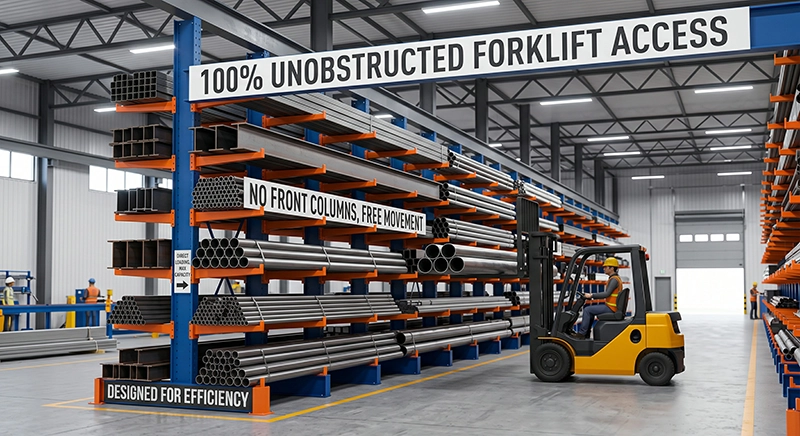
That is why heavy-duty cantilever racks for lumber yard matter. They lift the stock off the dirt, keep the lanes clearer, and make the right bundle visible instead of buried.
What a Better Yard Looks Like
A proper cantilever layout gives the yard a real structure. The timber stays separated by size and length. The high-value stock sits up where air can get around it. The forklift does one direct pull instead of wrecking the whole stack just to reach the next piece.
That is the practical way to improve outdoor lumber storage systems. Less moisture damage. Less re-stacking. Less wasted driving around the yard. It sounds plain because it is plain. Keep the lumber off the ground and the yard gets easier to run.
What Changes Once the Yard Is Fixed
When the rack plan is right, the yard stops acting like a wet stack problem.
- Less bottom-board rot and warp.
- Less bundle damage from ground contact.
- Less time lost digging through piles.
- Less forklift traffic bouncing around the same spot.
That is where the value shows up. Not in slogans. In fewer damaged packs, fewer wasted trips, and fewer complaints when the next truck backs in.
werkelijkheid
Dat is geen wondermiddel. Er zijn grenzen.
1) Yard surface still matters
If the slab or hardstand is uneven, the rack layout still needs real planning. Bad ground makes bad loading.
2) Weather still matters
Open yards need sensible drainage and, in some cases, roof or side protection. A rack alone will not beat constant rain.
3) Forklift access still matters
If the aisle width is wrong, the layout will choke. Measure the lane before you buy steel.
4) Not every stock type fits the same way
Very soft or unstable material may need added support, not just open cantilever arms.
Wat moet het team dan controleren
- Where is lumber still sitting on the ground?
- Which stacks get wet, warped, or crushed first?
- Where are the forklift pinch points?
- How much stock is being re-handled just to reach one bundle?
If those answers are ugly, the yard needs a proper review, not another promise that the next shift will sort it out.
Volgende stap
Fill out your yard area and forklift aisle width, then request the free 3D lumber yard cantilever layout and quote. That gives you a straight answer on how much floor you can clear and what the yard should do next.
Wilt u een 3D lay-out of een offerte?
Upload your yard dimensions and lumber sizes. We will review the layout and send back practical advice.

 EN
EN  DE
DE  RU
RU  NL
NL  PT
PT  JA
JA  ES
ES  IT
IT