

Is your laser cutter waiting on material?
In a metal fabrication shop, floor space is production capacity. If you are still stacking wooden pallets of steel and aluminum on the floor, you are creating a bottleneck that kills your laser’s uptime and risks damaging sensitive material. It’s time to stop the “forklift dance” and start organizing for speed.
The “Hidden Cost” of Floor Stacking in Fabrication
Walk into any busy fabrication shop in Melbourne or beyond, and the story is often the same. You have high-value machinery—fiber lasers, turret punches, and press brakes—capable of incredible speeds. Yet, the material flow feeding these machines is stuck in the past.
When 4mm mild steel is buried under a stack of 10mm plates, your operators waste valuable time waiting for a forklift driver to perform the “reshuffling” ritual. This isn’t just a nuisance; it’s a direct hit to your OEE (Overall Equipment Effectiveness). Furthermore, every time a sheet is dragged across another to be accessed, you risk surface scratches—a nightmare for anyone working with architectural stainless steel or aluminum.
To reclaim your floor and accelerate your feed rates, you need to transition from passive storage to an active Opslagrek van plaatstaal systeem.
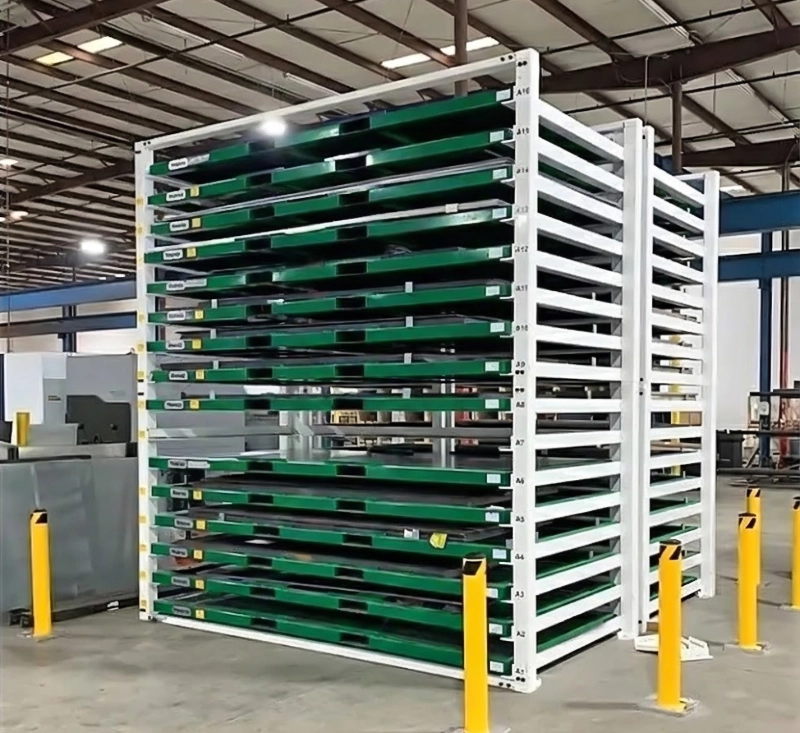
Figure 1: Maximizing vertical density to free up valuable workshop floor space.
Strategy 1: Vertical Density Over Horizontal Sprawl
The average metal fab shop wastes up to 60% of its raw material storage area simply by using the floor. Wooden pallets cannot be safely stacked high, especially when dealing with mixed gauges and material types.
By implementing a Horizontale opslag van plaatwerk system, you convert air rights into storage rights. A typical rack system can hold 20+ tons of material in a footprint that would normally only accommodate two pallets. This density allows you to bring your raw material inventory closer to the processing machines (Point of Use Storage), drastically reducing forklift travel time.
The “Drawer” Advantage
Unlike cantilever racks, which still require a forklift to pick specific sheets (often requiring unstacking), a Uitrolbaar vellenrek offers 100% selectivity. Each drawer acts as an independent storage unit.

Figure 2: 100% Selectivity means no more digging for the right gauge of steel.
Whether you need a single sheet of 16-gauge CR steel or a heavy plate of 1/2″ hot rolled, the operator simply cranks or pulls the drawer out. The material is immediately accessible for the overhead crane or vacuum lifter. No forklifts required for picking, and zero risk of “avalanche” accidents common with floor stacking.
Strategy 2: Protecting Surface Integrity
For shops fabricating parts for the medical, food, or architectural industries, surface quality is non-negotiable. Scratched material leads to rejected parts or expensive secondary polishing processes.
Traditional floor stacking is the enemy of quality. Debris gets trapped between sheets, and the friction of sliding sheets off a stack causes gouging. A proper rek van metaalplaat isolates your inventory. By using depalletizers to load the racks, you remove the wood and nails from the equation entirely. The sheets rest securely on the steel drawer, and because they are lifted vertically via vacuum lifter or clamps rather than dragged, the surface finish remains pristine.
Strategy 3: Seamless Integration with Laser & Punching Cells
The ultimate goal of space-saving is to improve workflow. The most efficient shops position their storage racks directly adjacent to the loading station of their fiber laser or turret punch.

Figure 3: Seamless workflow: From rack to laser cutter via vacuum lifter.
In this setup, a single operator can manage the loading process. While the laser is cutting, the operator pulls out the next required drawer, separates the sheet (using sheet separators for oily steel), and has it ready for the next cycle. This “internal logistics” optimization can reduce machine idle time by 15-20% per shift.
Strategy 4: Safety as a System, Not a Slogan
Manually handling heavy plates is one of the leading causes of back injuries and crushed fingers in the metal industry. Moving heavy pallets with forklifts in tight aisles increases the risk of collision with machinery or personnel.
Our racks are designed to facilitate Single Person Operation. Even with loads up to 5,000 kg per shelf, the crank-out mechanism allows an operator to expose the material without physical strain. By confining the heavy lifting to a specific, controlled zone served by a crane or jib, you remove the chaotic forklift traffic from your main production aisles.

Figure 4: Eliminating manual lifting risks with ergonomic drawer systems.
Frequently Asked Questions for Fabrication Shops
1. Can these racks handle standard 4’x8′, 5’x10′ and 6-meter sheets?Yes. We offer standard sizes to fit 2440mm x 1220mm (4’x8′) and 3000mm x 1500mm (5’x10′) sheets. We also manufacture custom heavy-duty racks for 6-meter plates often used in structural fabrication. 2. My laser cutter runs 24/7. How durable are the drawer bearings?The racks are engineered for high-cycle industrial environments. We use heavy-duty steel bearings and a track system designed to resist metal dust and debris common in fab shops, ensuring smooth operation for years. 3. What is the weight capacity per drawer?Our standard configurations range from 1,000 kg to 5,000 kg per drawer. For thick plate storage (20mm+), we recommend our crank-out heavy-duty series to ensure safety and ease of movement. 4. Do I need a forklift to operate the rack?Not for the daily picking process. You only need a forklift to load the initial bundle (using our depalletizer) or if you choose our “Full Forklift” model. For the “Roll Out” models, an overhead crane or vacuum lifter is the most efficient way to move sheets to the laser. 5. How much floor space can I actually save?Most clients report a floor space recovery of 50% to 70%. By stacking 8 to 20 levels high, you are condensing a sprawling pallet yard into a compact, organized vertical footprint. |
Ready to organize your shop and boost laser uptime?

 EN
EN  DE
DE  RU
RU  NL
NL  PT
PT  JA
JA  ES
ES  IT
IT