
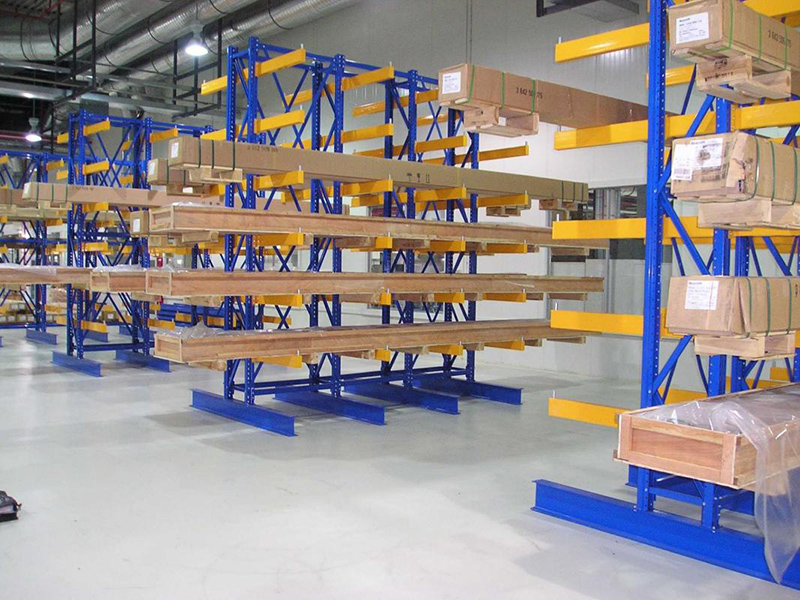
In our previous discussions, we’ve diagnosed the symptoms of a broken storage system: operational chaos, wasted money, and hidden safety risks. Now, let’s take a step back from the problems and do something different. Let’s architect a solution from the ground up.
Before we talk about any specific product or piece of hardware, let’s think like engineers and philosophers. If we had a blank slate and wanted to design the perfect system for storing and handling long materials, what would its fundamental, unchangeable laws be? What are the principles it must obey to solve our core problems?
After working with hundreds of facilities, we’ve found that any truly effective system comes down to three non-negotiable principles. Understanding them will give you a powerful framework to evaluate any solution you encounter.
Grundsatz 1: Unabhängigkeit der Einheit ("Grundsatz der Bibliothek")
Think about a library. Every book has its own specific spot on a shelf. To retrieve a book on ancient history, you don’t need to move the science fiction novels next to it. Each book is an independent unit.
Now think about a stack of pipes. To get to the third one from the bottom, you must violate this principle. You are forced to interact with and move other units.
Therefore, our first principle is Unit Independence.
Definition: Jede gelagerte Einheit (egal ob es sich um eine einzelne Stange, ein Bündel von Rohren oder eine Kiste handelt) muss einzeln zugänglich sein, ohne dass eine andere Einheit gestört wird.
Warum es nicht verhandelbar ist: Dieses Prinzip ist das direkte Gegenmittel gegen den "Wühl-Effekt". Es ist die einzige Möglichkeit, die Zeit- und Arbeitsverschwendung sowie die Sicherheitsrisiken zu beseitigen, die mit dem Durchwühlen eines Stapels verbunden sind. Es garantiert, dass die Zeit, die benötigt wird, um den ersten Gegenstand zu finden, mit der Zeit übereinstimmt, die benötigt wird, um den letzten Gegenstand zu finden.
Grundsatz 2: Ungehinderter Zugang ("Grundsatz der offenen Tür")
Imagine a filing cabinet where the drawers are blocked by a desk. Even if the files inside are perfectly organized, the system is useless if you can’t get to them.
This is the problem with trying to use conventional solutions, like pallet racking, for long materials. The front vertical posts of the rack act as a permanent “desk” blocking your “drawer.”
This leads to our second principle: Unobstructed Access.
Definition: Der Weg, auf dem ein Flurförderzeug (z. B. ein Gabelstapler) in eine Lagereinheit einfahren kann, muss an der Zugangsstelle völlig frei von baulichen Hindernissen sein.
Warum es nicht verhandelbar ist: For long materials loaded from the side, any front-facing obstruction makes a direct lift impossible. Unobstructed access is the physical enabler of Unit Independence. Without it, even if items are on separate shelves, you still can’t get to them efficiently.
Prinzip 3: Konstruierte Vertikalität ("Das Wolkenkratzer-Prinzip")
A city expands upwards, not just outwards. It uses engineering to safely build skyscrapers that multiply the value of a small plot of land. Your warehouse should operate on the same principle.
Floor stacking is like a city of single-story buildings—incredibly inefficient with space.
Our third and final principle is Engineered Verticality.
Definition: Das System muss professionell entworfen und konstruiert werden, um den gesamten vertikalen Kubus des Lagers sicher zu nutzen und die Luft über dem Boden in einen produktiven Vorteil zu verwandeln.
Warum es nicht verhandelbar ist: This is the direct solution to the problem of wasted space and the high cost of rent. It’s the only way to significantly increase your storage density without increasing your footprint. The keyword here is “engineered”—this is not about simply stacking higher, but about doing so within calculated, certified load limits to ensure absolute safety.
Die Blaupause für eine Lösung
Unit Independence, Unobstructed Access, and Engineered Verticality. These three principles form the blueprint for a perfect long-material storage system. They are the standard against which all potential solutions should be measured.
When you start your search for a solution, don’t start by looking at product catalogs. Start with these principles. Ask the supplier, “How does your system guarantee Unit Independence? How do you ensure Unobstructed Access? What engineering backs up your claim of Verticality?”
The system that can definitively answer all three questions is the system that will solve your problem. The industrial name for a structure designed from the ground up to embody these principles is the Kragarmregal. Er wurde nicht erfunden, um einfach nur ein weiteres Produkt zu sein, sondern als physische Antwort auf genau diesen Plan.

 EN
EN  DE
DE  RU
RU  NL
NL  PT
PT  JA
JA  ES
ES  IT
IT